Arch Manning, Texas Survive Ole Miss as Anxiety Grows
Arch Manning, Texas Survive Ole Miss as Anxiety Grows
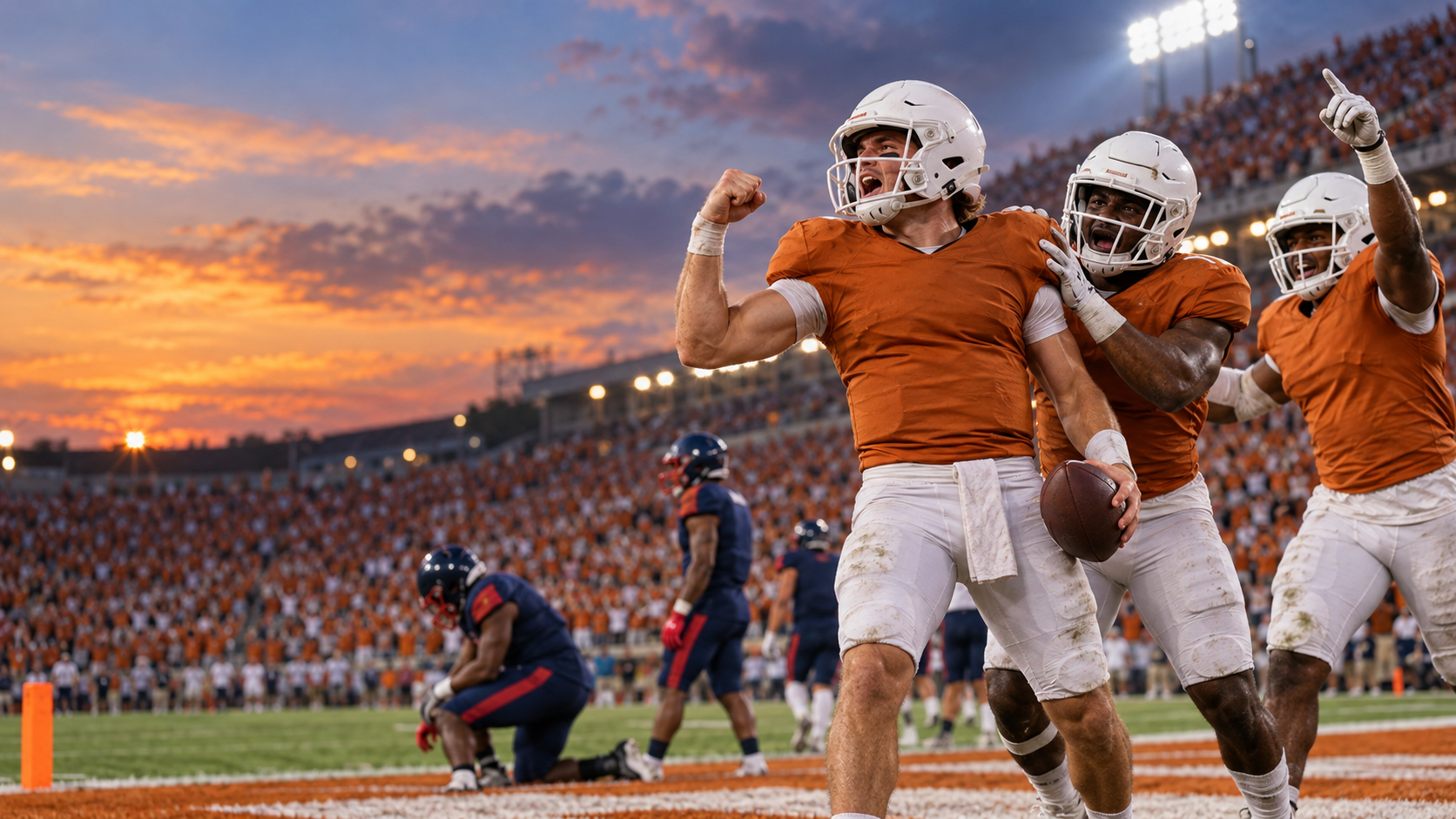
Texas defeated No. 7 Ole Miss, but the victory did not eliminate concerns surrounding the Longhorns. Instead, it produced two competing conclusions: Arch Manning and Texas found a way to win a critical game, while another second-half collapse exposed the late-game weaknesses that have unsettled Austin.
The result stopped a late-season slide and gave Steve Sarkisian’s team a valuable win over a highly ranked opponent. It also revived familiar questions about offensive rhythm, defensive execution, game management, and Texas’ ability to close.
That distinction matters. Texas survived Ole Miss. Survival is not the same as control.
Reports from Fox News, CBS Sports, and Dallas News described another tense finish for the Longhorns, with Manning at the center of the result and Sarkisian praising the quarterback’s “edgy” style of play (Source 1, Source 5).
The central question is no longer whether Texas has enough talent to beat elite opponents. It does. The question is whether the Longhorns can maintain their level after halftime and finish games before anxiety takes over.
Texas Gets the Result It Needed
The Ole Miss game carried major importance for Texas. The Longhorns entered the matchup needing to stop a late-season slide, and another loss would have increased pressure on the program, Sarkisian, and Manning.
Instead, Texas secured the result it needed. The victory provides immediate relief, prevents one difficult stretch from becoming a larger crisis, and shows that the team can respond when the stakes rise.
It does not mean every problem has disappeared. Texas still allowed the game to become uncomfortably close. The win changes the mood around the program, but it does not complete the evaluation.
CBS Sports identified Ole Miss as the No. 7 team in the country, giving the victory added significance (Source 5). Defeating a highly ranked opponent strengthens Texas’ résumé and confirms that the Longhorns can compete near the top of the national picture.
The uncomfortable finish changes the tone, not the value, of the win. A narrow escape still counts as a victory over an elite opponent. However, the way Texas reached the finish raises questions about whether it controlled the game or merely held on after losing command.
How Texas Built Its Advantage
Arch Manning Set the Tone
Manning was the central figure in the victory. Available reports characterize his performance as aggressive and “edgy,” a description Sarkisian used after the game (Source 7).
In this context, “edgy” appears to describe controlled aggression rather than reckless decision-making. Manning attacked opportunities, challenged Ole Miss’ defense, and helped create momentum before the game tightened.
Texas cannot rely only on conservative possessions and low-risk throws against a ranked opponent. The Longhorns need explosive plays, quarterback confidence, and the ability to punish defensive mistakes.
The available source summaries do not provide a complete box score. Manning’s verified passing yards, touchdowns, rushing numbers, and turnover total should be confirmed through an official game book or complete game report before publication.
Risk Created Momentum
Dallas News described Texas as taking a high-risk approach as the season reached a decisive stage (Source 9).
That aggression helped Texas create early momentum. Deep throws, aggressive fourth-down decisions, quarterback runs, and one-on-one matchups can all create advantages. They can also produce negative plays, short possessions, and poor field position when execution declines.
Texas needs aggression, but its aggression must match the situation. An attack designed to build a lead cannot remain unchanged when the priority becomes protecting possession and controlling the clock.
The issue is not whether Sarkisian should take risks. It is whether Texas recognizes when the risk-reward balance has changed.
The Second-Half Collapse Revived Austin Anxiety
Texas Lost Control After Halftime
The main concern from the Ole Miss game was Texas’ inability to maintain control after halftime. Reports described another second-half meltdown and a finish that intensified anxiety in Austin (Source 1).
A complete analysis should use play-by-play evidence to identify the causes, including scoring droughts, failed third downs, stalled drives, turnovers, defensive breakdowns, penalties, missed tackles, and field-position problems.
The available summaries establish the pattern but not every individual event. That limits the statistical detail that can responsibly be assigned to the game.
Texas appeared to have built enough of an advantage to control the matchup. After halftime, Ole Miss found a path back into the contest, forcing Texas to manage pressure instead of dictating terms. That is how a promising performance becomes a survival story.
Offensive Conservatism May Have Helped Ole Miss Recover
One question for Sarkisian is whether Texas became too conservative after taking control. Teams often reduce offensive risk while protecting a lead, but excessive caution can create its own danger.
Predictable runs, poor early-down efficiency, and a failure to attack favorable matchups can allow a trailing opponent to control field position. Texas must determine through drive-by-drive review whether its second-half approach helped Ole Miss regain confidence.
Defensive Execution Requires Review
Texas must also determine whether Ole Miss extended drives through missed assignments, missed tackles, penalties, explosive plays, or red-zone execution.
The reports do not provide enough verified play-by-play detail to assign every defensive failure to a specific player or unit. The conclusion should be based on game film and official statistics, not the final tension alone.
Still, the result reinforces the need for better closing defense. Texas cannot repeatedly depend on an opponent’s final mistake.
Manning’s Performance Under Pressure
Sarkisian’s description of Manning as “edgy” is central to the postgame evaluation (Source 7). Productive edge means attacking opportunities without allowing emotion to create unnecessary mistakes.
Manning did not need a perfect statistical performance. He needed to make enough plays to help Texas defeat Ole Miss, and he did that. His evaluation should include accuracy, turnover avoidance, third-down conversions, pressure management, play extension, and responses to momentum shifts.
His improvement will be measured by whether he can sustain pressure through four quarters and produce efficient late possessions. That responsibility is shared with the offensive line, receivers, running game, defense, and coaching staff.
Sarkisian’s Role in the Narrow Escape
Sarkisian deserves credit for preparing Texas to defeat a top-ranked Ole Miss team. The Longhorns created enough offensive momentum and played well enough overall to secure an important victory.
However, he must address the recurring second-half pattern. The key questions are:
- Why does Texas lose offensive rhythm after halftime?
- How effectively does the team adjust when opponents change tactics?
- Does the defense finish drives consistently?
- Are tempo, substitutions, and play-calling improving the closing operation?
- Does Texas become too conservative while protecting a lead?
Second-half collapses usually involve several connected problems, including execution, communication, conditioning, decision-making, and situational management. Sarkisian must identify the common cause before the pattern defines the season.
Late-game football rewards field position, possession, clock management, high-percentage throws, disciplined rushing, and secure tackling. Aggression remains valuable, but it must serve the situation.
What the Ole Miss Game Reveals About Texas
The victory confirms that Texas has enough talent to challenge top teams. The Longhorns possess quarterback ability, offensive creativity, and overall quality capable of producing major wins.
Texas is not yet a reliable front-runner, however. Talent is not the same as consistency. Repeated second-half problems make it difficult to trust the team when it builds a lead.
The next games should be evaluated through several measures:
- Second-half scoring margin
- Third-down conversion rate
- Turnover margin
- Explosive plays allowed
- Fourth-quarter efficiency
- Red-zone performance
- Time of possession and field position
Those indicators will show whether Texas solved its problems or merely survived them again.
Conclusion: Texas Must Learn to Finish
Arch Manning and Texas defeated Ole Miss, stopped a late-season slide, and secured a major win over a highly ranked opponent. Manning provided the aggression and playmaking the Longhorns needed, while Sarkisian’s approach helped Texas build an early advantage.
The second-half collapse kept the victory from feeling comfortable. Texas again allowed a game to become more difficult than necessary, reviving concerns about late-game execution and game management.
The Longhorns no longer need to prove they can win a big game. They need to prove they can finish one without making Austin wait for the collapse.
FAQ
Did Texas defeat Ole Miss?
Yes. Available reports state that Texas, led by Arch Manning, defeated Ole Miss. The final score, date, and venue should be confirmed through an official game report before publication.
How did Arch Manning perform against Ole Miss?
Manning helped Texas win a high-pressure matchup and received praise from Steve Sarkisian for his “edgy” style of play (Source 7). His complete statistics require confirmation from an official box score.
Why did the win create anxiety in Austin?
Texas allowed Ole Miss to recover after halftime, creating another tense finish. The second-half decline revived concerns about stalled drives, defensive execution, and the team’s ability to protect a lead.
What did Steve Sarkisian say about Manning?
Sarkisian praised Manning’s “edgy” play after the quarterback helped Texas defeat Ole Miss (Source 7). The exact quotation and full context should be verified before publication.
Was the Ole Miss game a turning point?
It could become one because Texas stopped a late-season slide and defeated a highly ranked opponent. The team must improve its second-half execution in subsequent games before the victory can be considered a complete turning point.
What must Texas improve next?
Texas must finish games more efficiently by sustaining offensive drives after halftime, protecting leads without becoming passive, improving third-down execution, limiting defensive breakdowns, and managing late-game possessions with greater discipline.