France Increases Police Presence to Prevent New Riots
France Increases Police Presence to Prevent New Riots
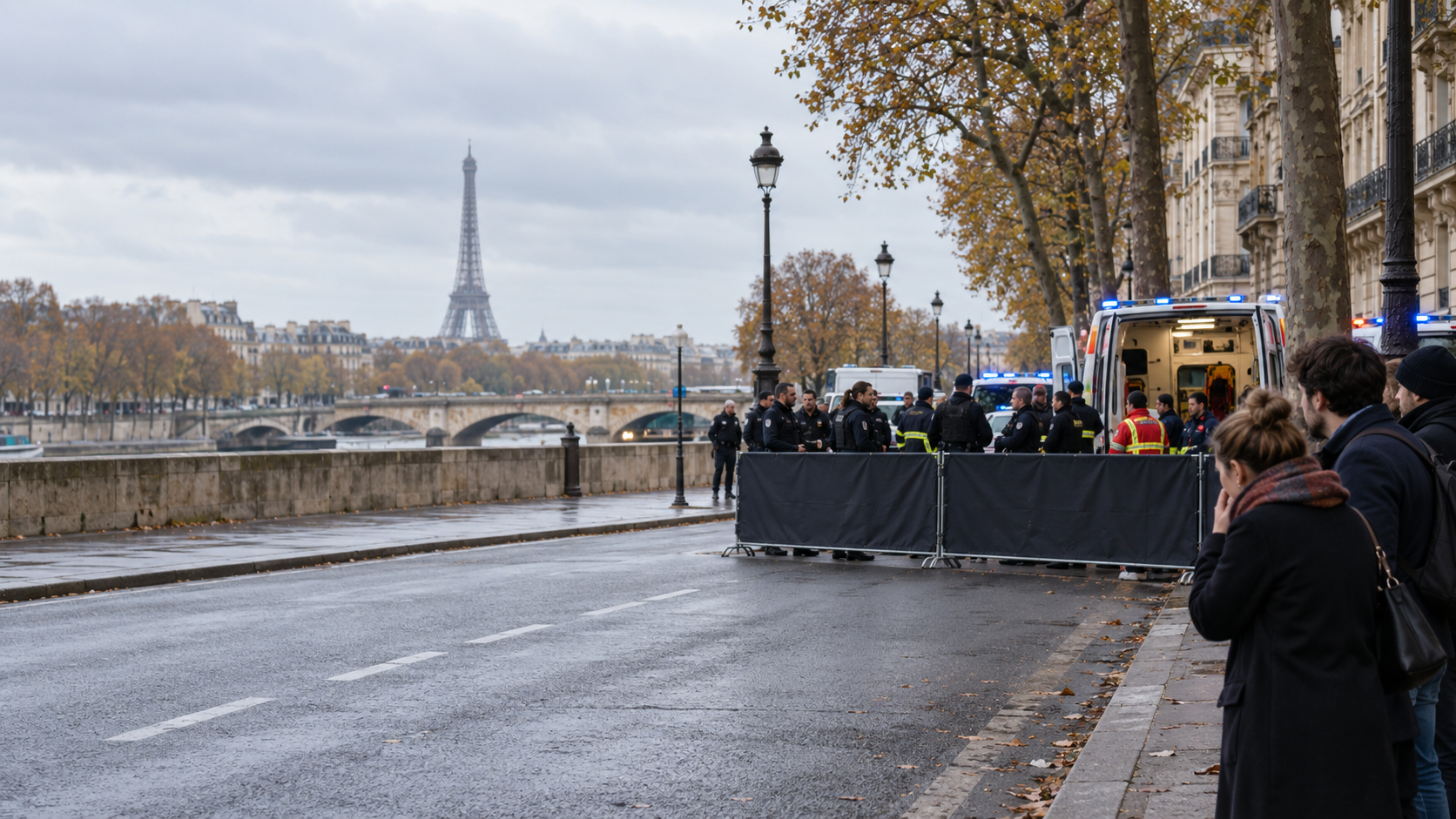
France is increasing its police presence after earlier riots, seeking to prevent renewed violence, property damage, and disruption. Reuters reported that French authorities were strengthening security measures to prevent a recurrence of unrest. Internazionale described the move as an effort to prevent another outbreak of deadly riots. Source 1 Source 3
The policy reflects a central tension in riot prevention. A visible security deployment may deter violence, protect vulnerable sites, and help emergency services operate. However, an excessive police presence can increase political and social tensions, particularly when peaceful protesters feel treated as potential criminals.
The available reporting establishes the broad policy and several official statements. It does not provide enough verified information to confirm exact deployment numbers, locations, dates, casualty totals, or operational tactics. Those details should not be inferred from incomplete or unrelated material.
Why France Is Increasing Police Presence
Preventing a Recurrence of Deadly Riots
The government’s approach is preventive rather than purely reactive. Authorities are increasing readiness before demonstrations or renewed unrest develop, rather than waiting for vandalism, arson, looting, or attacks on police to spread.
Preventive policing may involve deploying officers to vulnerable areas, protecting public buildings, securing transport infrastructure, and maintaining rapid-response capacity. The precise arrangements depend on local conditions, expected crowd sizes, intelligence assessments, and risks to public services.
Reactive policing begins after violence has already expanded. Officers may then face larger crowds, damaged infrastructure, blocked roads, and greater risks of injury. Preventive measures aim to contain those risks earlier.
The Government’s Security Message
The increased deployment also sends a political message. Authorities want residents, businesses, transport operators, and local governments to believe that the state is prepared to protect public safety.
Public statements may deter planned violence, signal government control, support officers, reassure residents and business owners, and warn that attacks on public institutions will receive a rapid response.
Such messaging must be distinguished from independently verified facts. A government announcement can confirm what officials intend to do, but it does not prove that violence was organized, that a particular group was responsible, or that a security measure has succeeded.
The Prime Minister’s Statement
A separate report stated that France’s prime minister blamed “ultra-left” groups for weekend riots and promised a “massive” security deployment. Source 9
That attribution matters because it frames the unrest as politically driven or organized. It may influence surveillance, arrests, intelligence gathering, and crowd-control tactics. It also shapes debate over whether the disturbances should be understood primarily as criminal acts, political mobilization, social anger, or a combination of factors.
The statement remains an official political allegation unless supported by additional evidence. Authorities should identify individual criminal conduct through evidence rather than assign collective blame to all protesters, political organizations, or people associated with a particular ideological label.
Individuals who commit arson, assault, vandalism, or looting can be investigated and prosecuted. Peaceful demonstrators should not automatically be treated as participants in violence.
What the Deployment May Involve
Officers in High-Risk Areas
Authorities may prioritize city centers, government buildings, transport hubs, shopping districts, and neighborhoods affected by earlier disturbances. Deployment levels can change quickly according to protest schedules, intelligence assessments, local tensions, expected crowd sizes, and threats to infrastructure or public services.
A larger presence does not necessarily mean officers will be stationed uniformly across a city. Authorities may concentrate resources around vulnerable sites while keeping other units available for incidents elsewhere.
The supplied sources do not establish the exact number of officers, specific cities, or deployment timetable.
Coordination Among Agencies
An effective response generally requires coordination among local police, national police units, gendarmerie forces, emergency services, and municipal authorities. Local forces understand neighborhood conditions, while national units can provide additional capacity when demonstrations exceed local resources.
Firefighters, ambulance crews, and medical personnel need protected access to injured people and burning buildings. Municipal authorities manage public spaces, transport arrangements, local facilities, and communication with residents.
The goal is not only to control crowds. It is also to keep hospitals, emergency routes, transport networks, and public services operating.
Protecting Critical Infrastructure
Authorities may seek to protect:
- Public transport stations and routes.
- Hospitals and emergency facilities.
- Schools and public offices.
- Communications and power infrastructure.
- Retail businesses and commercial districts.
- Residential buildings and community facilities.
Infrastructure protection connects security policy to daily life. Success should be measured not only by whether police disperse a crowd, but also by whether residents can travel safely, businesses can operate, and emergency workers can do their jobs.
Lessons From Earlier Riots
How Unrest Can Escalate
Unrest can develop through overlapping stages. A triggering incident may create public anger, demonstrations may attract larger crowds, and confrontations with police may increase tension. Isolated acts of violence can then spread to nearby streets or neighborhoods.
Social media can accelerate mobilization and rumor circulation. Videos and claims shared online may draw more people to an area before authorities verify what happened. False or incomplete information can intensify fear and anger.
The available material does not establish a single cause for France’s unrest or show how particular events began. Each claim requires verification.
Why Authorities Fear Recurrence
A repeat outbreak would be difficult to manage because unrest can move rapidly between neighborhoods. Police may face attacks, arson, property destruction, looting, blocked transport routes, and threats to emergency workers at the same time.
Repeated disruption can reduce commercial activity, delay public services, and damage confidence in local institutions. Authorities may conclude that early intervention is less costly than restoring order after violence spreads.
Human and Economic Costs
The consequences of riots extend beyond damaged buildings. Residents, police officers, emergency workers, and bystanders may suffer injuries. Families may face disrupted services or lost income, while businesses may incur repair costs that insurance does not fully cover.
Infrastructure damage can pressure local government budgets and disrupt schools, transport, healthcare, and municipal services. Recurring disorder may also affect France’s international image among visitors, investors, and foreign businesses.
The supplied sources do not provide verified casualty, arrest, damage, or financial-cost figures. Those figures should not be added without checking the original reporting and corroborating the data.
The Debate Over a “Massive” Deployment
Arguments Supporting the Policy
Supporters argue that a large police presence can deter planned violence, protect vulnerable locations, and allow officers to respond quickly to vandalism, arson, or attacks. It may also help prevent isolated incidents from becoming wider unrest, keep transport services operating, and reassure emergency workers.
The word “massive” signals the government’s intention to demonstrate readiness. Supporters argue that attacks on public buildings, police, and emergency workers require a rapid and visible response.
Concerns About Escalation
Critics warn that a highly visible security operation may make peaceful protesters feel threatened. Large formations of officers, restrictive barriers, or aggressive crowd-control tactics can increase confrontation rather than reduce it.
A heavy deployment may also discourage lawful assembly. In communities with strained relations with law enforcement, expanded policing may deepen mistrust. Effectiveness depends on more than officer numbers; it also requires intelligence, training, coordination, proportionality, clear rules, and accountability.
Balancing Safety and the Right to Protest
France’s response must distinguish among peaceful demonstrators, individuals committing crimes, and groups suspected of coordinating violence.
Peaceful assembly is a democratic right. Violence, arson, looting, and attacks on police or emergency workers are criminal acts that should be investigated and prosecuted. Restrictions on demonstrations should be lawful, necessary, and proportionate to specific risks.
Police actions should be documented and subject to oversight. Arrests should be based on evidence, not broad political categories. Authorities should explain the legal basis for restrictions and provide channels for complaints.
Precise language matters. Describing every protester as a rioter can worsen tensions and obscure responsibility. Identifying specific conduct supports both public safety and due process.
Security and Social Tension
Policing Alone Cannot Resolve Every Cause
Increased police presence can manage immediate threats, but it cannot resolve every grievance associated with unrest. Depending on verified evidence, relevant issues may include distrust of law enforcement, perceptions of unequal treatment, political polarization, economic hardship, youth alienation, or frustration within particular communities.
These factors should be treated as areas for investigation, not confirmed causes without supporting evidence. A government that relies only on security measures may achieve temporary calm without reducing the risk of future unrest.
Community Engagement
Community engagement can complement policing. Local authorities can communicate with residents, civic and religious leaders, schools, transport operators, and businesses. Clear explanations of police procedures may reduce uncertainty during demonstrations.
Rapid correction of misinformation is also important. Delayed or unclear communication can allow rumors to spread, especially when videos circulate online without context.
Support for affected businesses, residents, and neighborhoods can show that the state is addressing damage rather than focusing only on arrests. Community cooperation may improve early warnings and help authorities understand local tensions before they become emergencies.
Accountability
After a major security operation, authorities should ask:
- Were police actions proportionate?
- Were arrests based on reliable evidence?
- Were peaceful protesters or innocent residents wrongly detained?
- Could emergency services operate safely?
- Were civilians, officers, or emergency workers injured?
- Will complaints and allegations of misconduct be independently investigated?
Transparent review can improve public trust and future crisis planning. Accountability can strengthen public safety by showing that the rules apply to protesters and authorities alike.
How to Assess the Strategy
Short-Term Indicators
Immediate indicators include whether new riots are prevented, demonstrations remain peaceful, injuries and arrests decline, and public transport continues operating. Other measures include whether businesses and public services remain open, emergency crews can reach affected areas, and residents can move safely.
A high number of arrests alone does not prove success. Arrests may reflect effective intervention, but they may also indicate excessive or indiscriminate enforcement. The relevant questions are whether arrests were lawful, evidence-based, and connected to actual threats.
Long-Term Indicators
Long-term assessment should examine public confidence in police and government, the recurrence of unrest, police-community relations, complaints about excessive force, and economic recovery in affected areas.
A successful strategy should produce more than temporary calm. It should reduce violence while preserving lawful protest and improving trust. Authorities should also determine whether social and political grievances are receiving a meaningful response.
Reliable Data
Readers should verify deployment numbers, arrest totals, injury figures, damage estimates, dates, locations, and official statements through reliable reporting and primary documentation.
Several supplied entries are unusable for this subject. One contains only “100+,” another only “2000+,” and another only “200+.” Other entries concern MotoGP, football, a storm affecting France and Britain, or Russia-Ukraine diplomacy. They do not establish facts about France’s riot-prevention policy.
The relevant material consists of the Reuters report on increased police presence, the Internazionale report on preventing a recurrence of deadly riots, and the report about the prime minister’s allegation against “ultra-left” groups and promise of a “massive” deployment.
Conclusion
France’s decision to increase police presence reflects the government’s desire to prevent renewed violence and limit future damage. A stronger deployment may enable faster intervention, protect residents and infrastructure, and deter attacks, arson, and looting.
The policy also has limits. Police deployment cannot resolve deeper grievances on its own, and excessive or indiscriminate tactics may worsen distrust. Official accusations against political groups require evidence, careful investigation, and precise language.
The central measure of success is not the size of the deployment. France must maintain public safety while protecting lawful protest, ensuring accountability, supporting affected communities, and addressing the conditions that allow unrest to recur.
FAQ
Why is France increasing its police presence?
France is increasing police presence to prevent a repeat of earlier riots, protect public infrastructure, and respond quickly if violence or property damage occurs.
What did France’s prime minister say about the riots?
The prime minister reportedly blamed “ultra-left” groups for weekend riots and promised a “massive” security deployment. This is an official political claim and should be presented separately from independently verified evidence.
Does a larger police presence prevent riots?
It may deter violence, protect vulnerable locations, and limit escalation. Its effectiveness depends on intelligence, coordination, proportionality, accountability, and officers’ treatment of peaceful protesters and local communities.
Could a heavy deployment increase tensions?
Yes. A highly visible or aggressive deployment may make peaceful protesters feel threatened and increase mistrust, particularly in communities with strained relations with law enforcement.
What should readers monitor?
Readers should examine verified figures for police deployment, arrests, injuries, and damage. They should also assess the treatment of peaceful protesters, independent investigations into alleged misconduct, public-service continuity, and government action on longer-term grievances.
Are all the supplied sources relevant?
No. Only the sources discussing France’s increased police presence, deadly riots, and the prime minister’s security announcement are directly relevant. Several other entries contain unrelated topics, incomplete text, or no verifiable information.