iPhone Duo Screen Cracks Raise Hinge Durability Concerns
iPhone Duo Screen Cracks Raise Hinge Durability Concerns
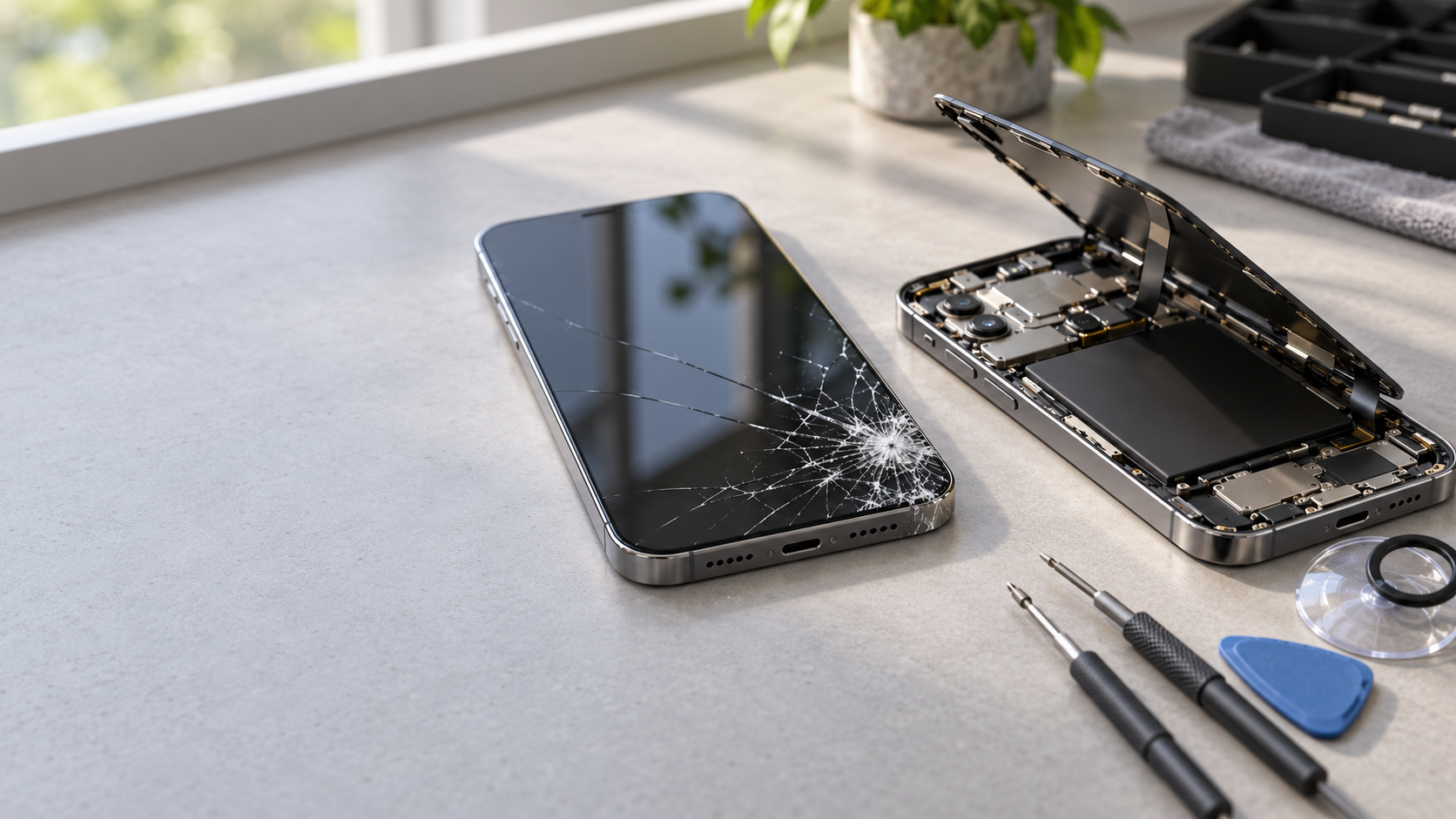
Reports of cracked iPhone Duo displays are raising questions about the phone’s hinge design and long-term durability. Several technology publications describe cracks appearing at or near the hinge, with some reports suggesting a recurring pattern rather than isolated drop damage.
AppleInsider has examined whether suspected hinge damage could contribute to the failures. A separate teardown reportedly identified the hinge as a possible structural weakness, while 9to5Mac described a consistent pattern among some reported display cracks. Basic Tutorials used the term “Crackgate,” and Techaeris reported that iFixit identified a plausible cause.
The available evidence supports further investigation but does not establish a confirmed design defect. There is no verified failure rate, controlled durability testing, or documented Apple response in the available reports. The most accurate conclusion is that iPhone Duo screen cracks may be connected to hinge stress, but the exact mechanism and scale remain uncertain.
What Is the Reported iPhone Duo Screen Problem?
Cracks May Follow a Recurring Pattern
Some iPhone Duo displays reportedly crack in a consistent location, often at or near the hinge. A repeated crack pattern can indicate concentrated stress in a specific structural area. Movement, pressure, alignment, material tolerances, or the relationship between the display and hinge could influence where damage begins.
A pattern does not prove that every affected phone has the same failure or that the hinge is responsible. Similar-looking cracks may result from drops, pressure, twisting, or pre-existing damage. Reliable conclusions require device inspections, a larger sample, and controlled testing.
Why Hinge-Adjacent Damage Matters
Conventional smartphone screen damage often follows a drop, corner impact, or pressure event. A foldable phone creates a different mechanical environment because the hinge connects two moving sections and controls how the device opens and closes.
Each folding cycle can transfer force through the frame, hinge assembly, display layers, and protective materials. If those parts are misaligned or do not move evenly, pressure may become concentrated near the fold.
The available reports do not establish whether iPhone Duo cracks result from normal use, external impact, hinge misalignment, or a combination of factors. A crack near the hinge should therefore be treated as evidence requiring inspection, not automatic proof of a manufacturing defect.
How the Hinge Could Affect the Display
A hinge must distribute force consistently every time the device opens and closes. Several general mechanisms could contribute to hinge-related damage:
- Uneven pressure along the folding area.
- Excessive bending in one section of the display.
- Misalignment between the hinge and display layers.
- Stress transferred from the frame into the display.
- Uneven hinge movement.
- Debris that prevents proper closure.
- Hinge damage that changes the intended movement path.
These are engineering possibilities, not confirmed findings about the iPhone Duo. AppleInsider’s report raises the possibility that hinge damage may cause some cracks, but the available summary does not include failure testing or a confirmed technical diagnosis.
A display can crack without a dramatic drop if repeated mechanical stress exceeds the tolerance of one layer or connection. Small forces accumulated over many opening and closing cycles may eventually create a visible fracture, especially when multiple owners report damage in a similar location.
What “Hinge Damage” Could Mean
The term may describe several conditions:
- Impact damage: A drop or collision damages the hinge and display simultaneously.
- Wear or deformation: Repeated use changes the hinge’s shape or movement.
- Uneven operating pressure: The hinge applies more force to one display area than intended.
- Structural vulnerability: The design leaves the display less protected at a particular point.
- Obstruction: Debris or another object prevents smooth closure.
Cause and effect can also be confused. Hinge-caused cracking means the hinge contributes directly to screen failure. Crack-caused hinge symptoms mean display damage changes how the device opens or closes. A shared event, such as an impact, may damage both components.
A technician should assess hinge movement, frame alignment, impact marks, display separation, and the crack itself rather than relying only on its location.
What the Teardown Reports Suggest
A reported iPhone Duo teardown suggests that the hinge design may contribute to cracked screens and raises broader durability questions. Teardowns can reveal the hinge’s internal arrangement, its connection to the frame, the proximity of components to display layers, and areas where force may transfer between parts.
However, a teardown cannot establish the actual failure rate or prove that normal use causes the damage. It cannot show whether every crack has the same origin, whether particular production batches are affected, or whether Apple considers the design defective.
Techaeris also reports that iFixit identified a plausible cause for iPhone Duo screen cracking. The available summary does not identify the exact mechanism, testing method, number of devices examined, or results from controlled stress testing. “Plausible cause” means that an explanation fits the available evidence; it does not prove that the explanation applies across a representative group of devices.
Why the Crack Pattern Matters
Repeated cracks in the same area could point to concerns involving:
- Hinge alignment.
- Display protection near the fold.
- Material durability.
- Assembly tolerances.
- Frame rigidity.
- Differences between individual units.
Pattern recognition is an early stage of technical investigation. Stronger evidence would include a large sample of affected phones, clear photographs, purchase and production details, usage history, and records showing whether devices experienced drops or pressure. Investigators would also need controlled opening, closing, pressure, and alignment tests.
If testing produced cracks in the same location under normal-use conditions, the hinge theory would become stronger. If cracks appeared only after impact or abnormal pressure, accidental damage would remain more likely.
Online reports do not establish the frequency of the problem. They do not reveal the total number of affected devices, the percentage of owners experiencing cracks, the average age at failure, repair costs, production-batch connections, or the number of verified failures. Owners with unusual failures are more likely to publish photographs, which can make an issue appear more common online than it is across the full ownership base.
Other Possible Causes
A crack near the hinge does not automatically exclude accidental damage. Possible causes include:
- A drop onto a corner or edge.
- Pressure while the device is folded.
- Objects pressing against the display in a bag.
- Twisting during transport.
- An object caught between the display sections.
- A fall that deforms the frame without obvious marks.
Individual units may also differ in hinge alignment, adhesive placement, frame construction, or display-layer tolerances. Small variations can affect how force moves through a foldable device, but evidence of a manufacturing issue would require repeated failures linked to a specific component, batch, assembly condition, or measurable tolerance.
Debris can prevent a foldable phone from closing evenly and may place additional pressure on the display or hinge. Do not insert tools into the hinge or attempt aggressive cleaning. If the hinge feels rough, loose, stiff, uneven, or difficult to close, stop applying force and request professional inspection.
Is This a Confirmed Design Defect?
Current reports support several limited conclusions:
- Some iPhone Duo displays have reportedly cracked at or near the hinge.
- Multiple reports describe a recurring pattern.
- A teardown raises concerns about the hinge’s structural role.
- iFixit is reported to have identified a plausible cause.
- Media coverage has framed the issue as a potential durability concern.
These points justify further investigation but do not confirm a widespread design defect, formal recall, or guaranteed warranty entitlement. “Crackgate,” the term used by Basic Tutorials, is a media label rather than an official Apple service classification.
Important questions remain unanswered:
- How many iPhone Duo devices are affected?
- Do the cracks develop during normal use?
- Is hinge damage present before the screen cracks?
- Are specific production batches involved?
- Can the failure be reproduced in controlled testing?
- Has Apple identified a recurring hardware problem?
- Will Apple offer special repair or replacement coverage?
The available source summaries do not include a confirmed Apple response, service bulletin, recall, or dedicated repair program. Owners should check current Apple Support information for warranty and service terms.
What Owners Should Do
Document the Damage
Take clear photographs of the full display, exact crack location, hinge, surrounding frame, and any dents or impact marks. Photograph the phone in open and closed positions and record any gap between the display and frame.
Note when the crack appeared and whether the phone was dropped, compressed, twisted, or exposed to an object between the folding sections. Record whether the hinge felt different beforehand and whether the crack expanded during opening or closing.
Preserve the purchase receipt, warranty information, repair records, and service history. Do not open the device or modify the hinge before inspection, since unauthorized disassembly can affect service evaluation and cause additional damage.
Limit Hinge Movement
Minimize opening and closing if the crack expands, the hinge becomes stiff or uneven, the screen lifts from the frame, glass fragments become exposed, or the display develops lines, flickering, dead areas, or touch problems. Stop using the device if it becomes unusually warm or begins to separate.
Do not force the phone flat or closed. Exposed glass can cause cuts, and continued movement can worsen internal damage. Keep the device away from children and avoid pressure on the damaged section.
Contact Apple or an Authorized Service Provider
Request a diagnostic inspection from Apple or an authorized service provider. Ask whether the inspection identifies impact damage, hinge deformation, display-layer failure, frame damage, alignment problems, or signs of pressure or obstruction.
Service eligibility depends on the device’s condition, warranty terms, region, and Apple’s current policies. A reported hinge-related failure does not guarantee free repair or replacement.
Conclusion
Reports point to a possible connection between iPhone Duo hinge behavior and screen cracks. The recurring hinge-area pattern, teardown concerns, and reported iFixit analysis make hinge-related damage a credible subject for investigation.
The evidence remains incomplete. No verified failure rate, detailed test results, or confirmed Apple response appears in the available summaries. “Crackgate” is a media label, not an established diagnosis or official service category.
Owners should photograph the damage, record the device’s history, minimize hinge movement, and seek professional inspection. Check Apple’s current support policies for warranty and repair information as new evidence becomes available.
Frequently Asked Questions
Does the iPhone Duo have a confirmed hinge-related screen defect?
No. Available reports describe a suspected connection between the hinge and screen cracks, but they do not confirm a widespread defect or official Apple diagnosis.
Where are the reported iPhone Duo screen cracks appearing?
Reports describe cracks at or near the hinge, with some coverage identifying a recurring pattern. The available summaries do not provide a standardized crack map or complete failure data.
What is “Crackgate” on the iPhone Duo?
“Crackgate” is a term Basic Tutorials uses for reports of early iPhone Duo screens cracking near the hinge. It is a media label, not an official Apple service classification.
Can a hinge cause a foldable phone screen to crack without a drop?
Repeated mechanical stress, misalignment, pressure, or an obstruction can theoretically contribute to display damage without a major impact. The specific iPhone Duo mechanism remains unconfirmed.
What should owners do after noticing a crack near the hinge?
Photograph the damage, record whether the phone was dropped or compressed, reduce opening and closing, and request an inspection from Apple or an authorized service provider.
Will Apple repair an iPhone Duo with a cracked screen for free?
Coverage depends on the device’s condition, warranty terms, region, and Apple’s current policy. The available reports do not confirm a free repair program or special coverage for hinge-related cracks.
Artikel Terkait
-
 Phantom Blade Zero Review: Brilliant Combat, Uneven Design
-
 Tomb Raider: Legacy of Atlantis Trailer Explained
-
 Call of Duty Reportedly Tops South Korean Game Charts
-
 iFixit iPhone Duo Teardown Raises Screen Crack Questions
-
 Zen Browser: A Promising Arc Replacement
-
 How to Build a Cheap Home Server and Save Money