Residential Cruise Passengers Left in Cambodia Amid Fuel Costs
Residential Cruise Passengers Left in Cambodia Amid Fuel Costs
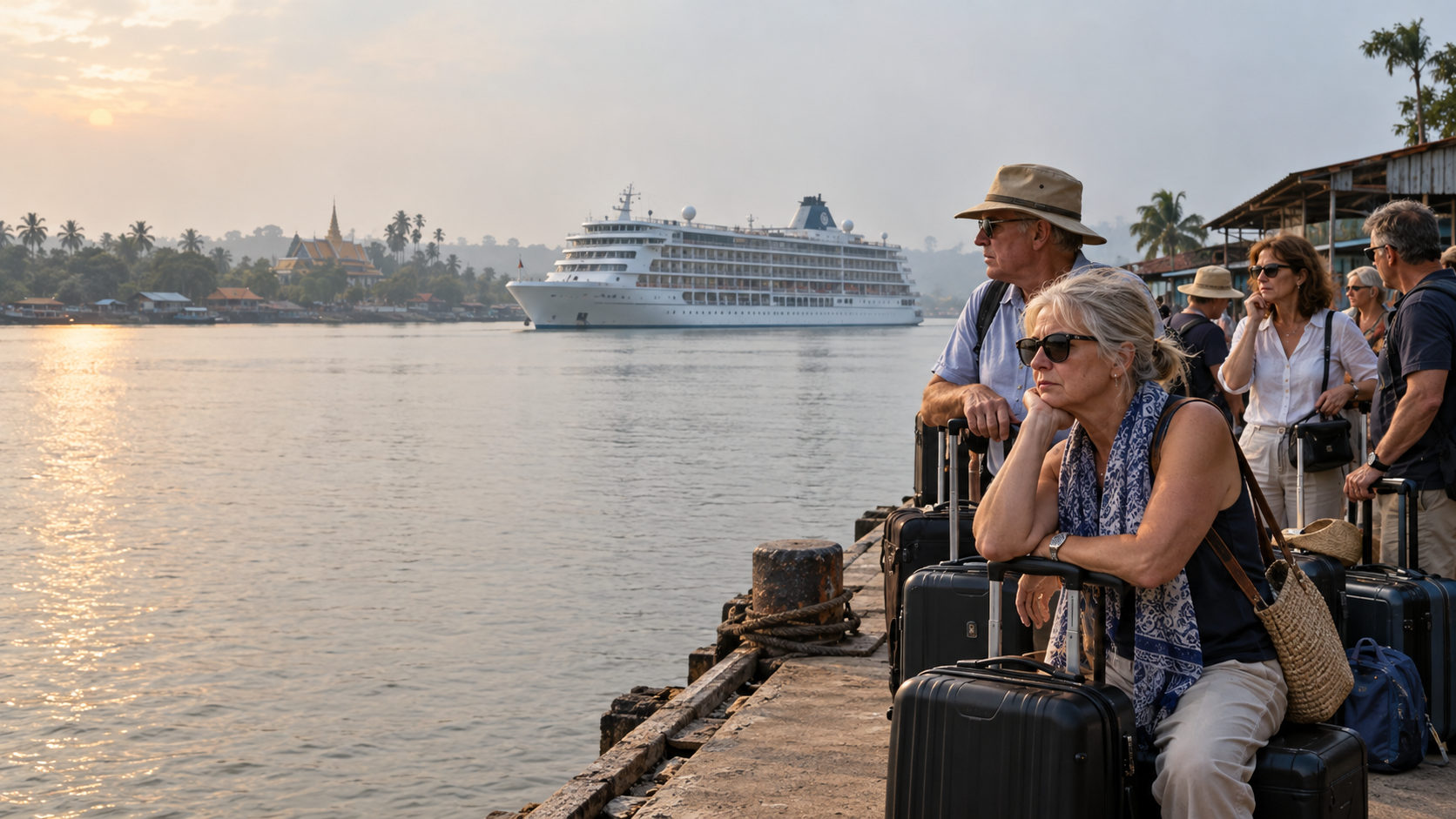
A luxury cruise ship was supposed to become a permanent home for residents who bought cabins and planned to travel around the world. Instead, passengers were reportedly left in Cambodia after the vessel’s operations were disrupted and rising fuel costs were cited as a reason.
The reports involve a residential cruise concept, in which customers purchase or secure long-term accommodation on a ship that combines private cabins with hotel services, international travel, restaurants, entertainment, and onboard amenities.
The incident highlights a central risk of residential cruising: life on board depends on the financial and operational health of one moving vessel. If the ship changes its route, enters maintenance, stops sailing, or cannot meet its costs, residents may lose access to both transportation and their home.
The BBC and Bloomberg summaries identify Cambodia as the location where passengers were stranded, while another report identifies the vessel as Villa Vie Odyssey. The Independent summary describes an abrupt suspension of a residential world cruise that left passengers in Cambodia. The available summaries do not establish the number of affected residents, the precise contractual arrangements, the assistance provided, or whether every passenger was formally removed from the ship. Source 1
What Happened to the Residential Cruise Passengers?
Residents Bought Cabins for Long-Term Life at Sea
Traditional cruise passengers purchase tickets for defined journeys. Residential cruise customers seek a long-term lifestyle built around a ship.
Residents may pay for a cabin, a long-term occupancy arrangement, or an extended travel package. In return, they expect private living space, food, housekeeping, regular port visits, and the ability to travel without repeatedly moving between hotels or homes.
The model may appeal to retirees, frequent travelers, and people seeking an alternative to conventional land-based living. It combines elements of a private residence, hotel, cruise vacation, and international travel program.
However, buying a cabin does not necessarily mean owning real estate in the same way as purchasing an apartment or house. A customer may instead hold a contractual right to occupy a cabin, a long-term travel entitlement, or another arrangement. The legal position depends on the agreement with the operator.
That distinction matters when the ship cannot operate as promised. Ownership or occupancy rights may not guarantee uninterrupted sailing, access to every scheduled port, permanent residence onboard, or automatic compensation after a major disruption.
Operations Were Reportedly Disrupted in Cambodia
The available reports describe passengers being stranded or left in Cambodia after the residential cruise’s operations were disrupted. The BBC summary attributes the situation to soaring fuel costs, while the Bloomberg summary also links it to rising fuel prices. Source 3 Source 5
The Independent summary similarly describes a residential world cruise that abruptly suspended operations, leaving passengers in Cambodia. Source 9
The summaries do not fully explain what happened after passengers reached shore. Unanswered questions include:
- How long residents were expected to remain in Cambodia.
- Whether every resident was disembarked.
- Whether the operator provided hotels, meals, or transportation.
- Whether passengers could retrieve their belongings.
- Whether refunds or compensation were offered.
- Whether the vessel later resumed service.
- Whether fuel costs were the only cause of the disruption.
For that reason, “kicked off” may be too definitive without direct passenger accounts or an official company statement. The reporting establishes a serious disruption but not every detail of the disembarkation process.
Why Fuel Costs Threaten Cruise Operations
Fuel powers propulsion, air conditioning, refrigeration, kitchens, elevators, lighting, pools, water systems, entertainment venues, communications, medical facilities, laundry, housekeeping, security, and navigation equipment.
Higher fuel prices therefore affect both the transportation and hospitality sides of the business. A cruise operator cannot simply reduce fuel consumption while maintaining every onboard service at normal levels.
A conventional cruise company may respond with fuel surcharges, route changes, slower speeds, fewer port calls, or revised schedules. A residential cruise faces the same pressures, but its promises may be more difficult to change because the ship is marketed as a home as well as a means of transportation.
Residential cruise businesses also face continuous costs, including:
- Crew wages.
- Repairs and maintenance.
- Insurance.
- Port fees.
- Food and supplies.
- Regulatory compliance.
- Communications and security.
- Financing and debt obligations.
- Administrative and marketing expenses.
An operator might reduce speed, skip ports, remain longer in selected destinations, refuel in cheaper locations, add a surcharge, delay departures, or suspend operations. Each option changes the service residents believed they were buying.
The available reports cite fuel costs as the reason for the Cambodia disruption, but they do not provide a complete financial explanation. Fuel prices may have been one factor in a broader operating problem involving cash flow, maintenance, staffing, port access, regulation, or contractual disputes. Those additional factors should not be treated as confirmed without evidence.
Why Cambodia Became Central to the Story
Cambodia can be a normal destination on an international cruise itinerary. A planned port call has a schedule: passengers disembark for excursions, the ship provides a departure time, and onboard services remain available before and after the visit.
An operational suspension is different. Passengers may be left without a clear timeline, a confirmed next destination, or certainty about when they can return to the vessel.
Residents may face problems such as finding temporary accommodation, arranging onward transportation, managing luggage, replacing inaccessible belongings, accessing medication, contacting relatives, and handling visa or immigration requirements.
For a residential customer, the ship may contain personal possessions, documents, medication, furniture, and daily necessities. It may also provide meals, housekeeping, medical support, security, internet access, mobility assistance, and a familiar community.
An unexpected departure can therefore affect both housing and travel. The incident illustrates why a residential cruise is not simply a longer vacation: it is a home that depends on a transportation business continuing to function.
Lifestyle Appeal and Legal Risks
Residential cruising offers a lifestyle that is difficult to replicate on land. Residents can wake up in different destinations without packing, arranging flights, or managing multiple hotel bookings.
The model may offer:
- International travel.
- Fewer household maintenance responsibilities.
- A community of fellow residents.
- Hotel-style services.
- Luxury amenities.
- Predictable routines.
- An alternative to owning multiple properties.
However, buyers must determine what they are actually purchasing. The arrangement could involve real property, a lease, a license to occupy a cabin, a long-term travel package, a membership, or a transferable contractual right.
Before committing funds, prospective residents should review:
- Monthly or annual maintenance fees.
- Food and service charges.
- Fuel-surcharge provisions.
- Cancellation and refund rules.
- Resale and transfer rights.
- Operator termination rights.
- Liability for delays.
- Emergency disembarkation policies.
- Insolvency protections.
- Governing law and dispute jurisdiction.
- Arbitration requirements.
A maritime or contract lawyer can explain rights that marketing materials may not clearly describe. Independent financial advice is also important when the purchase represents a significant portion of a person’s savings.
Main Risks of Buying a Residential Cruise Cabin
Operational Risk
Ships can be delayed, rerouted, inspected, repaired, or removed from service. Weather, mechanical problems, regulation, staffing shortages, port restrictions, and financial difficulties can all affect operations.
A residential cabin is tied to a moving asset. If the ship cannot sail, residents may lose access to the promised lifestyle even if the cabin remains physically intact.
Financial Risk
Residents may face exposure to the initial cabin price, recurring fees, maintenance increases, fuel surcharges, currency fluctuations, refund delays, resale restrictions, and losses if the operator’s financial position deteriorates.
A cabin may also be difficult to resell. Demand depends on the operator’s reputation, itinerary, finances, and ability to continue sailing.
The available reports do not establish the individual financial losses suffered by passengers in Cambodia. No reimbursement figures should be assumed without direct documentation.
Legal and Contractual Risk
Residential cruise contracts may involve several countries. The company may be incorporated in one jurisdiction, operate the ship under another country’s flag, employ workers from several nations, and serve residents from around the world.
The contract should explain which law applies, where disputes must be filed, whether arbitration is required, what happens after a prolonged suspension, whether force majeure applies, who pays for hotels and flights, how personal property is handled, and whether refunds are available if the operator becomes insolvent.
Medical and Accessibility Risk
Long-term residents may depend on the ship for medication storage, mobility assistance, dietary requirements, routine medical support, and emergency response. An unexpected stay ashore can interrupt those arrangements.
Residents should maintain access to essential medication, medical records, insurance information, emergency contacts, and alternative accommodation. They should also understand visa, healthcare, transport, and insurance requirements in destinations where the ship may stop unexpectedly.
What the Available Reports Confirm
The supplied reporting consistently describes four central facts:
- A luxury or residential cruise ship was involved.
- Passengers or residents expected long-term travel or life at sea.
- The ship’s operations were disrupted in Cambodia.
- Rising or soaring fuel costs were cited as the reason.
One report identifies the vessel as Villa Vie Odyssey. The BBC and Bloomberg summaries describe passengers stranded in Cambodia because of fuel costs, while The Independent summary refers to an abruptly suspended residential world cruise. Source 7
Important details remain unclear, including the number of affected residents, the date of the disruption, the ship’s current operating status, the legal nature of the cabin purchases, the assistance provided, the value of any refunds, and whether legal claims or insolvency proceedings followed.
Unsupported passenger counts and unrelated source labels should not be presented as established facts.
How Prospective Residents Can Protect Themselves
Before buying, prospective residents should ask:
- What exactly does the purchase provide?
- Is the cabin owned, leased, or licensed?
- Can the operator terminate the agreement?
- What happens if the ship cannot sail?
- Who pays for hotels and flights?
- Are fuel surcharges permitted?
- Can recurring fees increase without a limit?
- What happens if the company becomes insolvent?
- Can the cabin be resold or transferred?
- Where must disputes be resolved?
- Does insurance cover interruption or emergency disembarkation?
- What happens to personal property left onboard?
Answers should appear in the written contract, not only in sales presentations.
Residents should retain copies of purchase or occupancy agreements, payment records, insurance policies, passports, visas, medical information, prescription details, emergency contacts, and company correspondence. They should also maintain emergency funds, access to alternative accommodation, a land-based mailing address, independent transportation options, and essential medication outside the ship.
Travel, medical, evacuation, and interruption insurance may provide protection, but coverage varies and exclusions require careful review.
Conclusion: A Floating Home Still Depends on a Working Ship
Residents reportedly bought cabins intending to live and travel on a luxury cruise ship. Rising fuel costs were then cited in reports about a disruption that left passengers in Cambodia.
The story exposes the central risk of residential cruising: a cabin may feel like a home, but that home depends on a complex transportation business. The ship must continue sailing, maintain its services, pay its crew, meet regulatory requirements, access ports, and manage volatile costs.
Before purchasing a residential cruise cabin, buyers should investigate the operator, understand the ownership structure, review emergency and refund provisions, and prepare for the possibility that the ship may stop operating as planned.
Frequently Asked Questions
Why were residents reportedly removed or left in Cambodia?
The available reports cite rising or soaring fuel costs as the reason for the disruption that left passengers in Cambodia. They do not fully explain the operator’s financial position or the exact disembarkation process.
Which residential cruise ship was involved?
One supplied report identifies the vessel as Villa Vie Odyssey. Its operator, contractual structure, and current status should be verified through direct reporting or an official statement.
Did the residents own their cabins?
The summaries say that some residents bought cabins, but they do not establish the legal structure of those purchases. Buyers may have held ownership, occupancy, lease, or travel rights under different agreements.
Were passengers given hotels, refunds, or transportation?
The supplied summaries do not confirm the assistance provided after passengers were left in Cambodia. Claims about hotels, refunds, food, or transportation require direct evidence.
Can fuel prices force a cruise ship to change or cancel its itinerary?
Yes. Fuel affects propulsion and onboard power. Operators may slow the ship, change routes, reduce port calls, add surcharges, delay departures, or suspend operations.
What should buyers check before purchasing a residential cruise cabin?
They should review ownership rights, recurring fees, fuel-surcharge rules, cancellation terms, emergency-disembarkation policies, refund provisions, insurance, insolvency protections, and dispute jurisdiction. Independent legal and financial advice can help assess the agreement.