Rubin Telescope Could Find More Earth Mini-Moons
Rubin Telescope Could Find More Earth Mini-Moons
Earth has one permanent natural satellite: the Moon. However, small asteroids and other near-Earth objects can become temporary companions. These objects, informally called mini-moons, are briefly influenced or captured by Earth’s gravity before escaping, colliding with a planetary body or continuing along another solar orbit.
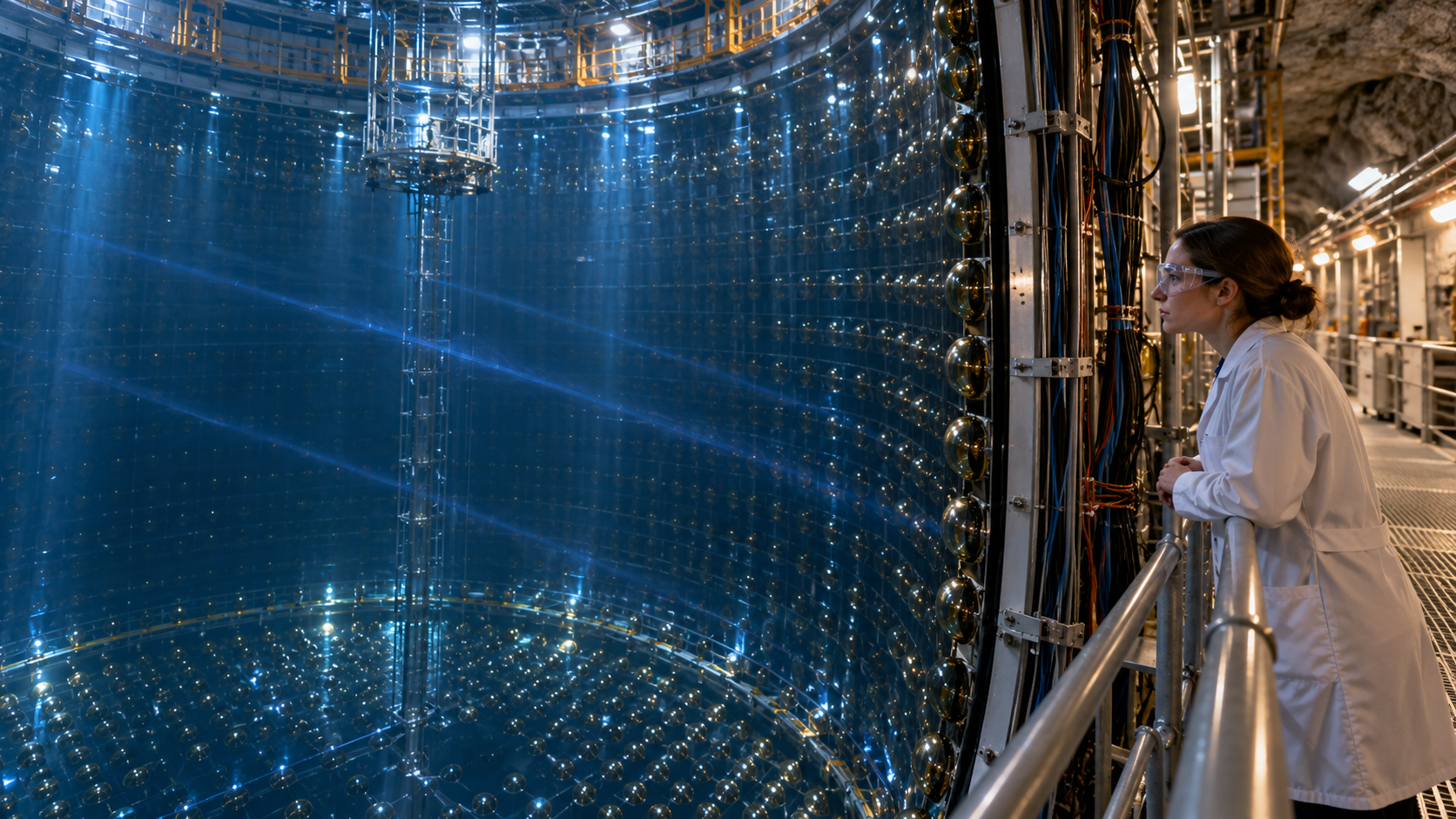
The Vera C. Rubin Observatory could reveal many more of these short-lived companions. Its wide-field survey will repeatedly image large sections of the sky, helping astronomers detect faint objects that move quickly and remain near Earth for only a limited time. The resulting observations could improve the discovery and tracking of temporary satellites and identify potential targets for close scientific study Source 1.
What Is an Earth Mini-Moon?
A mini-moon is a small natural object that becomes temporarily associated with Earth through a complex gravitational interaction. Most are expected to be asteroids or near-Earth objects. The term is informal and does not replace the object’s official astronomical classification.
Earth’s Moon is a large, permanent natural satellite in a stable orbit. A temporary satellite remains gravitationally associated with Earth for a limited period, while a passing near-Earth asteroid approaches the planet without becoming temporarily bound.
A mini-moon may appear to circle Earth, but its motion is more complicated than the Moon’s regular orbit. The object is affected simultaneously by Earth, the Moon and the Sun. Its path can resemble a loop around Earth while it continues to move through the wider Solar System.
Not every asteroid that passes close to Earth becomes a mini-moon. Temporary capture depends on the object’s speed, direction and position within the Earth-Sun system.
How Temporary Capture Happens
A typical sequence may unfold as follows:
- A small asteroid approaches Earth on a solar orbit.
- Earth’s gravity changes its speed and trajectory.
- Under suitable conditions, the asteroid becomes temporarily associated with Earth.
- The object follows a complex path through the Earth-Sun system.
- Gravitational effects eventually destabilize the relationship.
- The object escapes, collides with a planetary body or returns to another solar orbit.
Earth does not usually capture objects permanently because it is itself orbiting the Sun. Solar gravity remains dominant across the system, while the Moon also perturbs the asteroid’s path. A small change in speed can determine whether an object remains near Earth or escapes.
This process is sometimes called weak gravitational capture. A mini-moon does not settle into a long-term, stable orbit like Earth’s Moon. Instead, it occupies a temporary dynamical state that may last for weeks, months or longer, depending on its trajectory.
Why Mini-Moons Are Difficult to Detect
Mini-moons are usually small, faint and difficult to predict. A dark asteroid may reflect very little sunlight, and brightness decreases rapidly as an object becomes smaller or moves farther from a telescope.
Nearby objects can also move across the sky much faster than distant stars. In successive images, a mini-moon may appear as a streak or shift noticeably between exposures. It could be mistaken for image noise, a satellite or an instrumental artifact.
The observation window may be short. Daylight, weather, the telescope’s location and the object’s position can all limit visibility. Objects approaching from the direction of the Sun are especially difficult to observe with ground-based optical telescopes.
Determining whether an object is truly a temporary satellite requires repeated measurements. One observation provides a position but not a reliable orbit. Multiple observations allow astronomers to estimate the object’s speed, direction and gravitational relationship with Earth.
What the Vera C. Rubin Observatory Adds
The Vera C. Rubin Observatory is designed to conduct repeated, wide-field surveys of the changing sky. Its observing program will record moving and variable objects over time.
Repeated imaging can:
- Reveal objects that appear only briefly.
- Show movement against fixed background stars.
- Provide positions for orbit calculations.
- Identify objects missed by narrower surveys.
- Support rapid alerts for follow-up observations.
Automated software will compare new images with earlier observations, identify changes and search for moving points of light. The process may involve detecting a faint object, measuring its position, comparing it with known asteroids and satellites, linking observations across exposures or nights, calculating a preliminary orbit and sending the candidate for follow-up.
Rubin will not identify every moving object as a mini-moon. It will produce candidates. Astronomers will then use additional observations and orbital calculations to determine whether a candidate is temporarily captured by Earth.
More observations should improve orbit calculations. Researchers may be able to estimate how long an object has remained nearby, when it is likely to escape and whether it presents any impact risk. Temporary capture alone does not indicate danger, but a precise orbit is essential for evaluating an object’s future path.
Follow-up observations will remain important. Other observatories can observe candidates at different times, wavelengths and viewing angles. Combining data from multiple facilities can improve orbital estimates and reveal properties such as brightness changes, rotation and approximate size.
What Scientists Can Learn
A larger sample of mini-moons could allow scientists to compare their sizes, shapes, orbits, capture durations, rotation rates, reflectivity and likely origins within the near-Earth asteroid population.
These objects provide unusually close examples of the small bodies moving through Earth’s orbital neighborhood. Their trajectories may reveal how asteroids move from the main asteroid belt or other source regions into near-Earth space. Tracking them can also improve understanding of which small objects are difficult to detect before a close approach.
Mini-moons are natural tests of complex gravitational modeling. Their motion reflects the combined effects of the Sun, Earth and Moon. Researchers can compare observations with computer simulations to test models of weak gravitational capture and improve predictions for other asteroids, comets and spacecraft.
Mini-moons and meteorites involve different phenomena. Mini-moons are temporary, present-day companions of Earth, while meteorites preserve material from collisions and chemical processes that occurred billions of years ago. Together, these research areas show how small bodies preserve information about the formation and evolution of the Solar System Source 5.
Could a Mini-Moon Be Visited?
A mini-moon could become an attractive spacecraft target if its orbit, size and timing were suitable. Depending on its path, it might require less energy to reach than a distant asteroid on a more demanding trajectory.
A mission could measure its surface composition, shape, rotation, internal structure, surface texture and response to the Earth-Sun gravitational environment. However, temporary and changing orbits would make navigation and mission planning difficult. The target could leave Earth’s neighborhood before a mission was ready.
A realistic path from discovery to exploration would include:
- A survey detects a possible mini-moon.
- Follow-up telescopes confirm the object and improve its orbit.
- Researchers estimate its size, brightness, rotation and physical properties.
- Mission teams evaluate launch windows and trajectory requirements.
- A spacecraft concept undergoes scientific and technical review.
- An agency decides whether to fund and develop the mission.
NASA has reported efforts to change how science missions are selected and developed, with the goal of creating more frequent opportunities for scientific exploration Source 3. That policy context could support future small-body missions, but it does not guarantee that any mini-moon will be visited.
The Limits of the Search
An initial observation identifies a possible moving object, not a confirmed mini-moon. Confirmation requires additional measurements, independent telescope observations and orbital calculations. Some candidates will be ordinary near-Earth asteroids, artificial satellites, image artifacts or objects whose paths cannot initially be determined.
Rubin cannot observe every object continuously. Clouds, moonlight, daylight and an object’s position in the sky can prevent detection. Global telescope networks and specialized follow-up surveys will remain important.
No reliable fixed number should be promised for how many mini-moons Rubin will find. The final count will depend on object size, brightness, trajectory, visibility, detection software and follow-up coverage. More discoveries will not mean that Earth has acquired multiple permanent moons.
Asteroids can also change dramatically under extreme conditions. Solar heating, rapid rotation, impacts and volatile loss can cause an asteroid to fragment. Such an event is not related to mini-moons, but it demonstrates how dynamic small bodies can be Source 7.
Why Finding More Mini-Moons Matters
The search could provide:
- Better knowledge of the near-Earth asteroid population.
- More accurate models of temporary gravitational capture.
- Improved tracking of small objects near Earth.
- New opportunities for planetary defense research.
- Potential targets for future spacecraft.
- Greater understanding of motion through the Earth-Sun system.
Earth has one permanent natural satellite: the Moon. It can also temporarily acquire smaller natural companions whose paths are unstable and short-lived. The Vera C. Rubin Observatory will primarily serve as a discovery and tracking facility, not as a spacecraft that visits these objects. Its repeated, wide-field observations could reveal mini-moons that previous surveys missed and provide the data needed to study their origins and trajectories Source 1.
Frequently Asked Questions
How many moons does Earth have?
Earth has one permanent natural satellite: the Moon. Small asteroids can become temporarily associated with Earth, but they do not remain in stable, permanent orbits.
What is a mini-moon?
A mini-moon is a small natural object, usually an asteroid or near-Earth object, that becomes temporarily captured by Earth’s gravitational influence. Its orbit eventually becomes unstable.
Will Rubin discover mini-moons?
Rubin should improve the search by repeatedly surveying wide areas of the sky for faint moving objects. Discovery will depend on each object’s size, brightness, trajectory and visibility. Follow-up observations will be required for confirmation.
Are mini-moons dangerous?
Most mini-moons are small, and temporary capture does not automatically indicate an impact threat. Scientists must calculate each object’s orbit to assess its future path.
Could humans visit a mini-moon?
A mini-moon could become a spacecraft target if its size, orbit and timing were suitable. Its temporary and changing path would make mission planning difficult. Discovery would be an initial step, not a guarantee of a mission.
Are mini-moons the same as asteroids that break apart near the Sun?
No. A mini-moon is defined by its temporary gravitational relationship with Earth. An asteroid breaking apart near the Sun is a separate event caused by processes such as solar heating, rapid rotation, impacts or volatile loss.